
A suite of products for all practice areas
Stacker makes it easy to build customer portals, CRMs, internal tools, and other business applications for your team. In minutes, not months.
Key Features
Key features of Z-HRMS
01
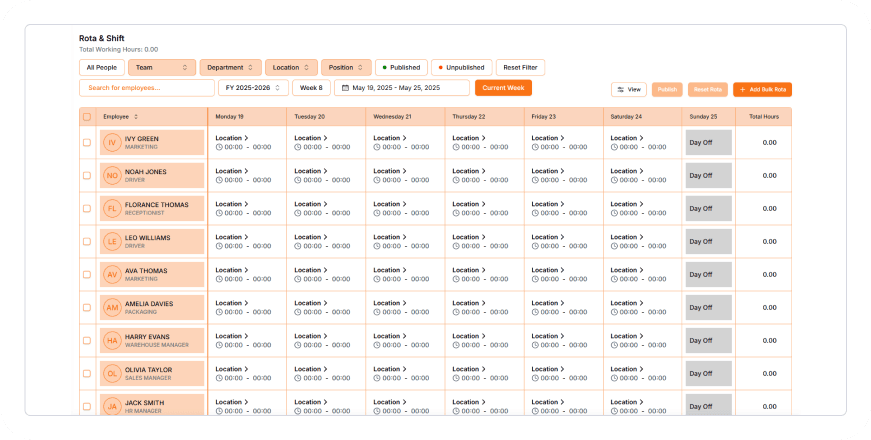
Rota & Shift Management
A proper rota and shift management system improves a system by efficiently allocating staff across different shifts, ensuring proper coverage during peak hours, considering employee availability and preferences,which leads to better staff scheduling, reduced labor costs, increased productivity, and improved employee satisfaction by minimizing scheduling conflicts and promoting fairness in shift assignments.
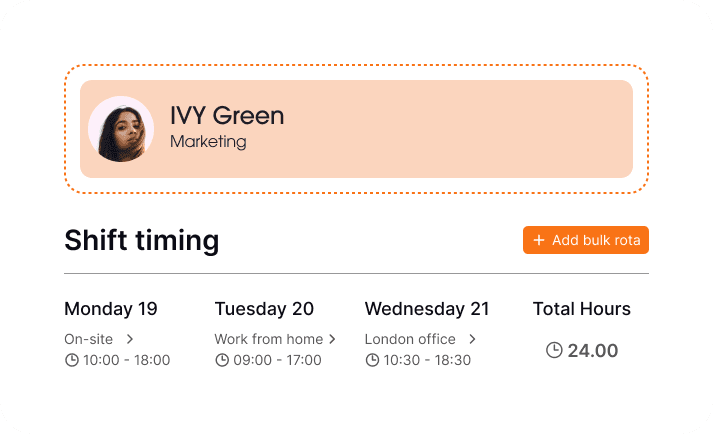
Optimized staffing levels:
The system can automatically adjust staff levels based on demand fluctuations, preventing overstaffing during slow periods and understaffing during busy times.
Employee preference consideration:
Employees can input their availability and preferred shifts, allowing the system to create schedules that better align with individual needs.
Fair shift allocation:
The system can distribute shifts evenly across the team, preventing any single employee from consistently getting undesirable shifts.
Reduced scheduling conflicts:
By managing all scheduling information in one place, the system minimizes the chance of scheduling conflicts between employees.
Improved communication:
With readily accessible schedules online, employees are always informed about their upcoming shifts, reducing confusion and miscommunication.
Increased productivity:
Properly staffed shifts can lead to better productivity as employees are not overloaded with work.
Enhanced employee satisfaction:
When employees feel their schedules are fair and consider their needs, it can lead to higher job satisfaction and reduced staff turnover.
Cost efficiency:
By optimizing staff levels, the system can help to reduce labor costs.
02
Easy Onboarding
Reduced administrative burden:
Automates paperwork and data entry, freeing up HR staff to focus on more strategic tasks.
Improved employee experience:
Provides a seamless, user-friendly experience for new hires, making them feel welcomed and supported.
Faster time to productivity:
Enables new employees to access critical information and training materials quickly, enabling them to start contributing sooner.
Enhanced engagement:
Personalized onboarding experience can help new hires feel more connected to the company culture and their team.
Consistent onboarding process:
Ensures all new employees receive the same essential information and training, regardless of their role or location.
Better compliance:
Simplifies the process of communicating important company policies and procedures.
Data-driven insights:
Provides employers to track onboarding progress and identify areas for improvement of the work.
An easy onboarding employee system improves a company's overall system by streamlining the new hire process, allowing new employees to quickly access necessary information and training, which leads to faster integration into the company culture, increased productivity, and improved employee retention rates, ultimately making the system more efficient and effective.
03
HR Timesheet
An HR timesheet system improves an HR system by providing a centralized and automated way to track employee work hours, which leads to increased accuracy in payroll calculations, better visibility into labor costs, streamlined time-off management, and ultimately allows HR professionals to focus on more strategic tasks instead of manual time tracking.
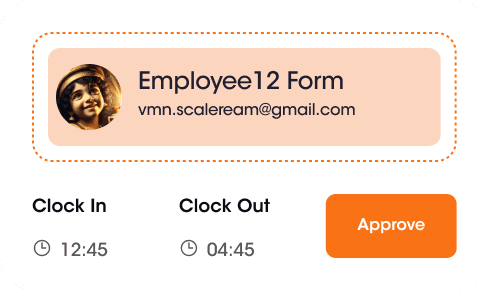
Accurate Payroll:
By electronically recording hours worked, the system minimizes errors in payroll calculations, ensuring employees are paid correctly and companies avoid overpayments.
Improved Efficiency:
Employees can submit timesheets digitally, eliminating the need for paper forms and manual data entry, saving HR time and effort.
Labor Cost Management:
Real-time data on employee hours allows HR to effectively monitor labor costs, identify areas for optimization, and make informed staffing decisions.
Time-Off Tracking:
Integration with leave management systems allows employees to request and track vacation, sick days, and other absences directly through the timesheet.
Compliance Assurance:
By accurately recording hours worked, HR can ensure compliance with labor laws regarding overtime and minimum wage.
04
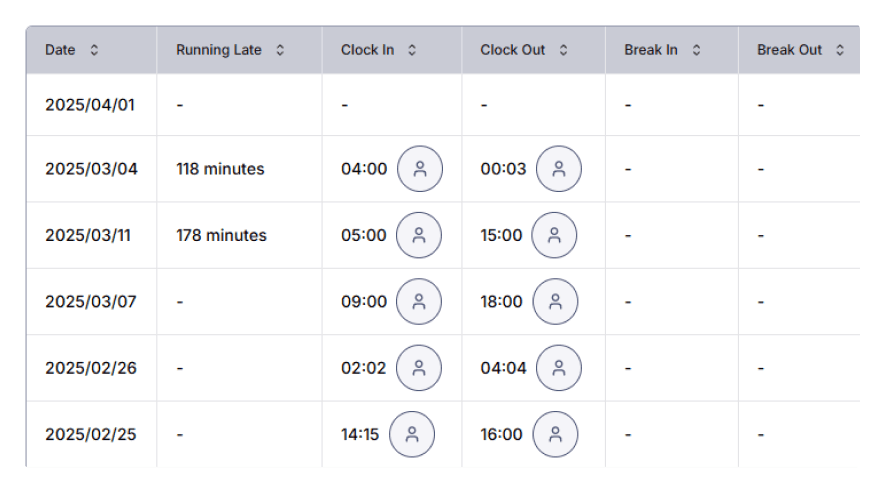
Attendance Management
Accuracy and Efficiency:
Eliminates the need for paper timesheets, minimizing errors in recording attendance data and simplifying the process of calculating hours worked, overtime, and leave balances.
Compliance with Labor Laws:
Helps ensure adherence to regulations regarding working hours, breaks, overtime, and leave policies, reducing the risk of legal issues.
Data-Driven Insights:
Provides detailed reports on employee attendance trends, allowing HR to identify patterns of absenteeism, potential issues, and areas for improvement.
Reduced Administrative Burden:
Automates routine tasks like time tracking and leave approvals, freeing up HR staff to focus on more strategic initiatives.
Improved Payroll Accuracy:
By accurately recording hours worked, HR can ensure compliance with labor laws regarding overtime and minimum wage.
Time Theft Prevention:
Features like biometric authentication or Barcode scan can help deter employees from clocking in for others or manipulating their timesheets.
Employee Self-Service:
Allows employees to access their own attendance records, submit leave requests, and manage their time off, improving transparency and employee engagement.
An attendance management system improves an HR system by automating time tracking, reducing manual data entry errors, ensuring compliance with labor laws, providing real-time insights into employee attendance patterns, streamlining payroll calculations, and freeing up HR staff to focus on more strategic tasks, ultimately improving overall efficiency and productivity within the HR department.
05
Jobs & Recruitments
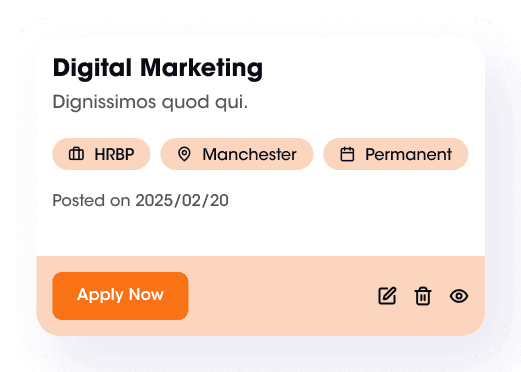
A cloud-based recruitment system improves an HR system by centralizing candidate data, automating repetitive tasks, providing real-time access to information, enabling better collaboration, facilitating streamlined workflows, and allowing for advanced analytics, ultimately leading to faster hiring times and improved quality of candidates while freeing up HR professionals to focus on more strategic initiatives.
Improved efficiency:
Automates tasks like resume screening, job posting, candidate communication, and interview scheduling, reducing manual work and time spent on administrative duties.
Centralized data:
Stores all candidate information in a single, accessible database, allowing for easy access and data analysis across the HR team.
Real-time visibility:
Provides real-time updates on candidate progress throughout the recruitment process, enabling better decision-making.
Enhanced collaboration:
Allows multiple team members to access and contribute to the recruitment process simultaneously, fostering better communication and collaboration.
Scalability:
Can easily adapt to changing recruitment needs as a company grows or shrinks, without requiring significant infrastructure changes.
Advanced analytics:
Generates data-driven insights on recruitment trends, candidate quality, and hiring effectiveness, helping to identify areas for improvement.
Mobile accessibility:
Enables access to the recruitment system from any device with an internet connection, increasing flexibility for recruiters and candidates.
Cost-effectiveness:
Eliminates the need for expensive on-premise hardware and software, with a subscription-based model often providing cost-effective access to features.
06
Leave Management
Reduced paperwork and manual errors:
Eliminates the need for paper forms and manual data entry, leading to fewer errors and faster processing.
Improved employee experience:
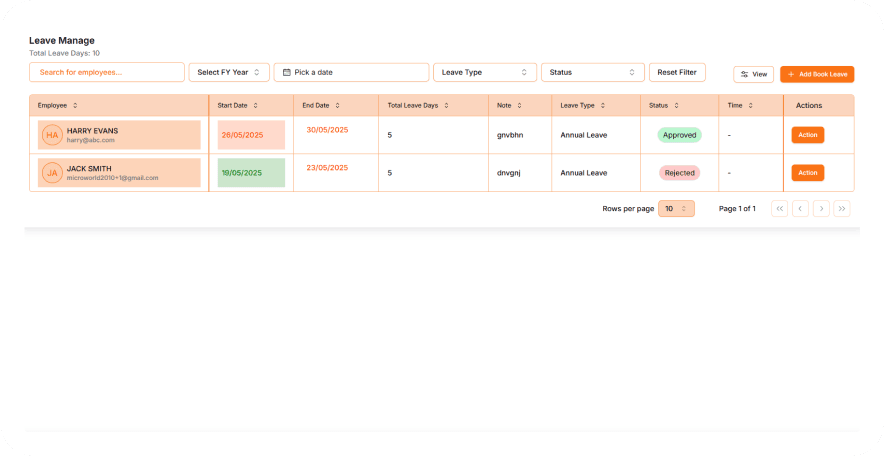
Employees can easily submit leave requests, check their remaining leave balance, and track the status of their requests through a user-friendly platform.
Enhanced visibility for managers:
Managers can quickly review leave requests, approve or deny them, and monitor team leave balances to ensure adequate coverage.
Streamlined approval workflows:
Customizable workflows can be set up to route leave requests to the appropriate approvers based on company policies and employee hierarchy.
Compliance with labor laws:
System can be configured to adhere to relevant employment laws regarding vacation time, sick leave, and other leave types.
Accurate workforce planning:
Real-time data on employee absences allows HR to better forecast staffing needs and address potential gaps.
Integration with payroll systems:
Seamless integration with payroll systems ensures accurate deductions for leave taken.
A leave management system improves an HR system by automating and streamlining the process of managing employee time off, reducing administrative burdens on HR teams, ensuring compliance with labor laws, improving employee experience by providing easy access to request and track leave, and offering real-time data for better workforce planning, ultimately saving time and costs.
07
EOD (End Of the Day)
Performance Monitoring:
Tracks key sales metrics like total sales, average transaction size, number of customers, top-selling products, and sales by salesperson, enabling immediate evaluation of daily performance against targets.
Early Problem Detection:
Allows for early identification of potential issues like low sales, unexpected trends, or staff performance concerns, enabling prompt corrective actions.
Improved Decision Making:
Provides data-driven insights to inform strategic decisions regarding pricing, promotions, product placement, and staff scheduling.
Staff Accountability:
Holds sales team members accountable for their individual performance and motivates them to achieve daily sales goals.
Accurate Sales Forecasting:
Helps in forecasting future sales trends by analyzing patterns and variations in daily sales data.
Cash Management:
Ensures accurate cash reconciliation by comparing the day's sales with the register totals, preventing discrepancies.
A leave management system improves an HR system by automating and streamlining the process of managing employee time off, reducing administrative burdens on HR teams, ensuring compliance with labor laws, improving employee experience by providing easy access to request and track leave, and offering real-time data for better workforce planning, ultimately saving time and costs.